PHP Course for Beginners: A Complete Roadmap to Start Coding in 2026
November 10, 2026 · 7 min read
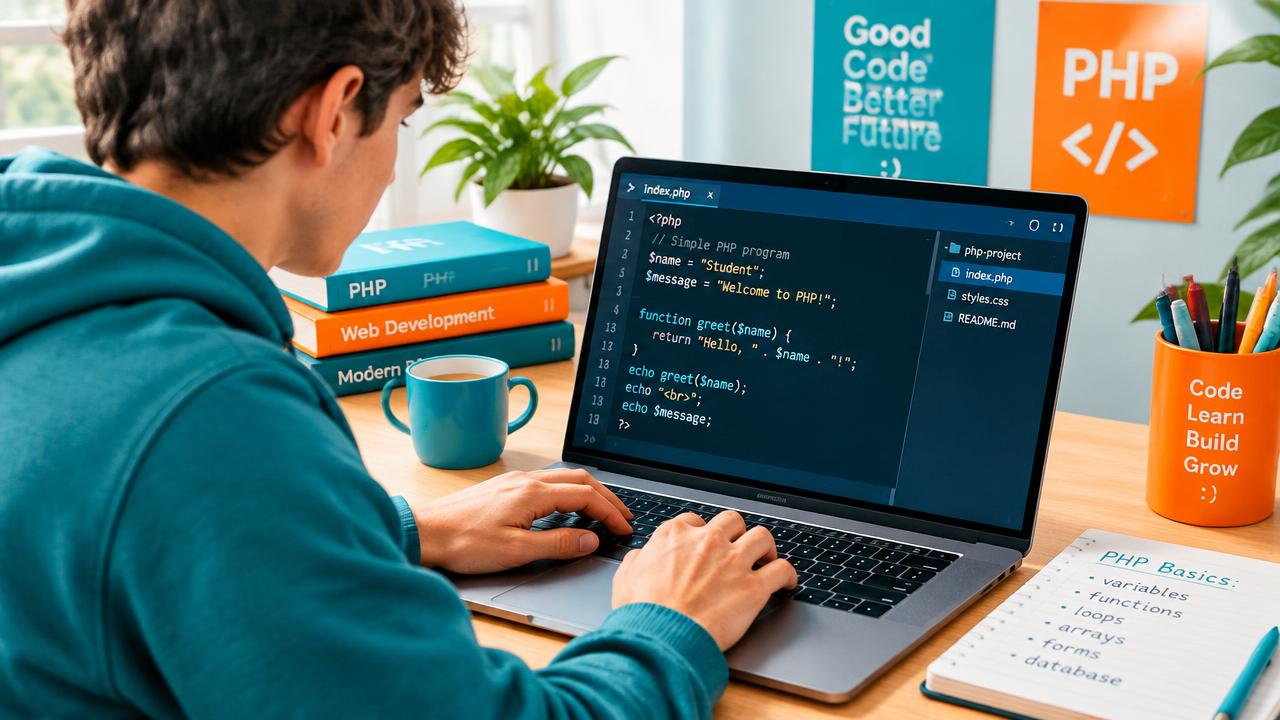
If you have ever wondered how websites remember your login, save your shopping cart, or send you a confirmation email after you fill out a form, you have already met the work of a server-side language. For more than two decades, PHP has been one of the most popular choices for that job. It powers a huge share of the web, including content management systems, e-commerce stores, booking platforms and countless custom business applications. That is exactly why a well-structured PHP Course for Beginners is still one of the smartest first steps for anyone who wants to build real, working websites.
This guide walks you through everything you need to know before you start: why PHP is worth learning, what a beginner course should cover, how long it realistically takes, the mistakes most new learners make, and how PHP fits into a larger career plan.
Why PHP Is Still Worth Learning
New programming languages appear every year, so it is natural to ask whether PHP is still relevant. The short answer is yes. PHP is mature, stable and actively maintained. Modern versions are dramatically faster than older releases, support strict typing, and include features that make code cleaner and safer. A large number of existing websites run on PHP, and every one of those sites needs developers to maintain, secure and improve it.
There are also very practical reasons PHP is friendly for beginners:
- It is easy to set up. Almost every hosting provider supports PHP out of the box, and local tools let you run it on your own laptop in minutes.
- You see results quickly. Write a few lines, refresh your browser, and your page changes. That instant feedback keeps motivation high.
- It works naturally with HTML. You can mix PHP into normal web pages, which makes the connection between code and what users see very clear.
- The community is enormous. Whatever error message you hit, someone has already solved it and written about it.
- It opens doors to popular platforms. Knowing PHP makes it far easier to customise themes, plugins and frameworks used by thousands of businesses.
If you are still deciding which skill to learn first, our article on the top in-demand tech skills to learn in 2026 compares PHP with other options such as cloud, data and design so you can choose with confidence.
What a Good PHP Course for Beginners Should Cover
Not all courses are equal. Some jump straight into frameworks before you understand the basics, while others spend weeks on theory without letting you build anything. A strong beginner course follows a clear progression from fundamentals to a finished project. Here is the structure we recommend looking for.
1. The Foundations of the Web
Before writing PHP, you should understand how a browser talks to a server. Learn what happens when someone types a URL, what HTTP requests and responses are, and the difference between client-side code (HTML, CSS, JavaScript) and server-side code (PHP). A little HTML and CSS knowledge goes a long way here.
2. Core PHP Syntax
This is where you learn the building blocks of the language:
- Variables, data types and constants
- Operators and expressions
- Conditional statements such as if, else and switch
- Loops including for, while and foreach
- Functions, parameters and return values
- Arrays, both indexed and associative
A simple first program might look like this:
<?php
$name = "Student";
echo "Hello, " . $name . "! Welcome to PHP.";
?>
It looks small, but it already teaches you variables, strings, concatenation and output.
3. Working With Forms and User Input
Real websites collect information: contact forms, sign-up pages, search boxes. A beginner course should teach you how to receive form data, validate it, sanitise it and show helpful error messages. This is also where you first learn about security, because user input should never be trusted blindly.
4. Databases With MySQL
Most PHP applications store data in a database. You should learn how to create tables, insert records, read them back, update them and delete them, often called CRUD operations. Just as importantly, you should learn to use prepared statements so your application is protected against SQL injection, one of the most common attacks on the web.
5. Sessions, Cookies and Authentication
Login systems are a rite of passage for every PHP learner. Understanding sessions and cookies lets you keep users signed in, remember preferences and protect private pages. Learning to hash passwords properly is a must-have skill.
6. Object-Oriented PHP
Once the basics feel comfortable, a good course introduces classes, objects, properties, methods, inheritance and interfaces. Object-oriented programming helps you organise larger projects and prepares you for modern frameworks.
7. A Capstone Project
Finally, you should build something complete, such as a blog, a to-do manager, a student registration portal or a simple online store. A finished project proves you can connect every concept together, and it becomes the first item in your portfolio.
How Long Does It Take to Learn PHP?
The honest answer depends on how consistently you practise. For most learners who study around one to two hours a day, a realistic timeline looks like this:
- Weeks 1 to 2: Web basics, setting up your environment and core syntax.
- Weeks 3 to 4: Functions, arrays, forms and input validation.
- Weeks 5 to 6: MySQL, CRUD operations and prepared statements.
- Weeks 7 to 8: Sessions, authentication and object-oriented PHP.
- Weeks 9 to 10: A full capstone project and deployment to a live server.
In roughly two to three months, you can move from complete beginner to someone who can build and launch a working dynamic website. Consistency matters far more than speed. Short daily sessions beat occasional weekend marathons every time. If you struggle with keeping a routine, read our guide to effective study habits for online learners for practical techniques that actually stick.
Common Mistakes Beginners Make
Learning to code is a journey full of small stumbles. Knowing the common traps in advance can save you weeks of frustration.
- Copying code without understanding it. It is fine to look at examples, but always type them yourself and change them to see what happens.
- Skipping security basics. Validating input, escaping output and using prepared statements should be habits from day one, not an afterthought.
- Jumping into frameworks too early. Frameworks are powerful, but they hide a lot of logic. Learn plain PHP first so you understand what the framework is doing for you.
- Never finishing a project. Tutorials feel productive, but employers and clients want to see finished work. Build small, complete projects often.
Choosing the Right Course Format
A beginner course works best when it combines short video lessons, hands-on exercises, quizzes and real projects. Look for clear explanations, an up-to-date syllabus that uses modern PHP versions, downloadable resources and a certificate you can share on your professional profile. Mentor support is a huge advantage, especially in the first few weeks when small errors can feel overwhelming.
At SkillNewton, our Online Skill Development Courses are designed around exactly these principles: practical lessons, guided projects and a learning path that builds steadily from fundamentals to real-world skills. If you want a detailed checklist for comparing different platforms, our guide on how to choose the right online course explains what to look for before you enrol anywhere.
Where PHP Can Take Your Career
PHP is rarely the final destination; it is a launchpad. Once you are comfortable with it, you can explore several directions:
- Back-end developer: Build APIs, business logic and database-driven applications.
- Full-stack developer: Combine PHP with JavaScript, modern front-end tools and responsive design.
- CMS and e-commerce specialist: Customise themes, plugins and online stores for businesses.
- Freelancer: Many small businesses need website updates, bug fixes and new features, which makes PHP a great freelance skill.
If you are aiming for a long-term career in building websites, our web development career guide maps out the complete journey from beginner to job-ready developer, including portfolio tips and interview preparation.
The best time to start learning PHP was years ago. The second best time is today, with a clear plan and one small project.
Final Thoughts
PHP remains one of the most accessible and practical ways to start building real websites. It teaches you how the web actually works, gives you visible results quickly and leads naturally into back-end, full-stack and freelance opportunities. The key is to follow a structured path: understand the web, master core syntax, work with forms and databases, learn security early and finish real projects.
If you are ready to take the first step, a guided PHP Course for Beginners will give you the structure, practice and support you need to go from curious learner to confident developer. Start small, stay consistent, and in a few months you will be building websites you are genuinely proud of.
Keep reading
 Careers
Top 10 In-Demand Tech Skills to Learn in 2026
From web development and AI to cloud and cybersecurity, discover the tech skills employers want most and how to start learning them.
Read article Learning
How to Choose the Right Online Course for Your Career Goals
A practical 9-step framework to compare syllabuses, instructors, projects and certificates so you pick a course you will actually finish.
Read article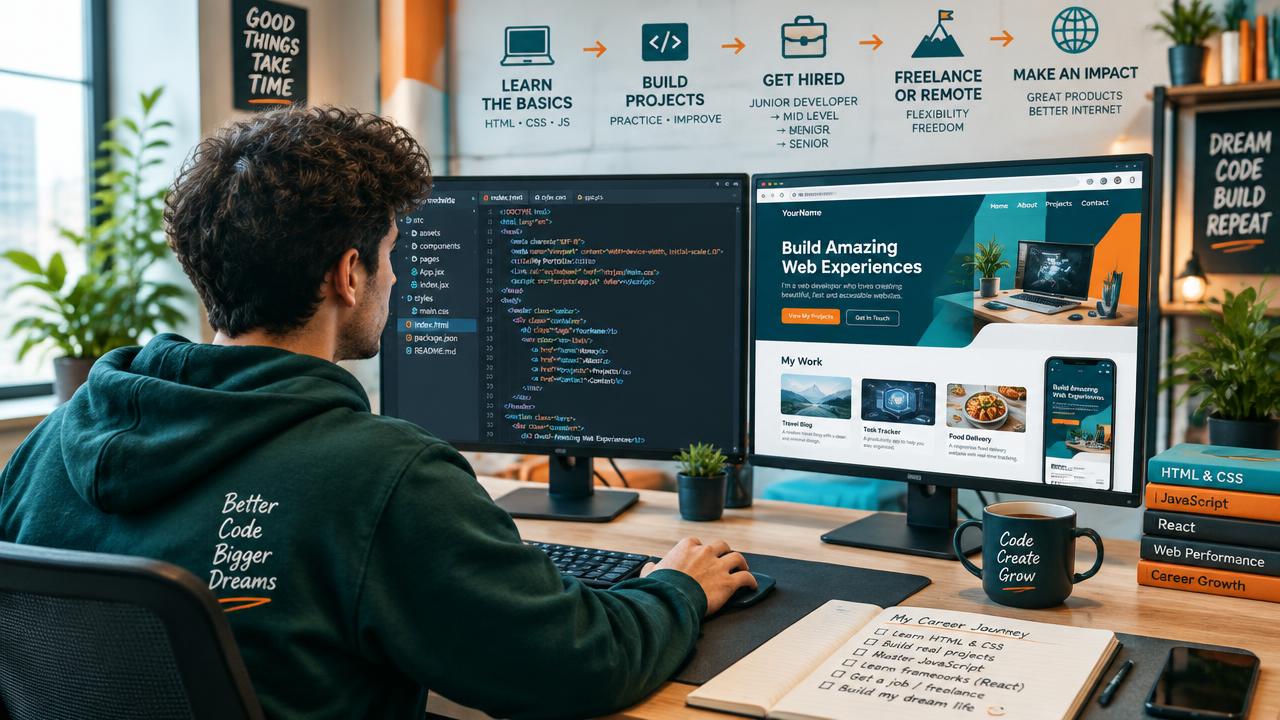 Careers
Web Development Career Guide: From Beginner to Job-Ready
A step-by-step path from HTML and CSS to back-end, databases, portfolio projects and interviews for aspiring web developers.
Read article