12 Effective Study Habits Every Online Learner Should Build
October 24, 2026 · 6 min read
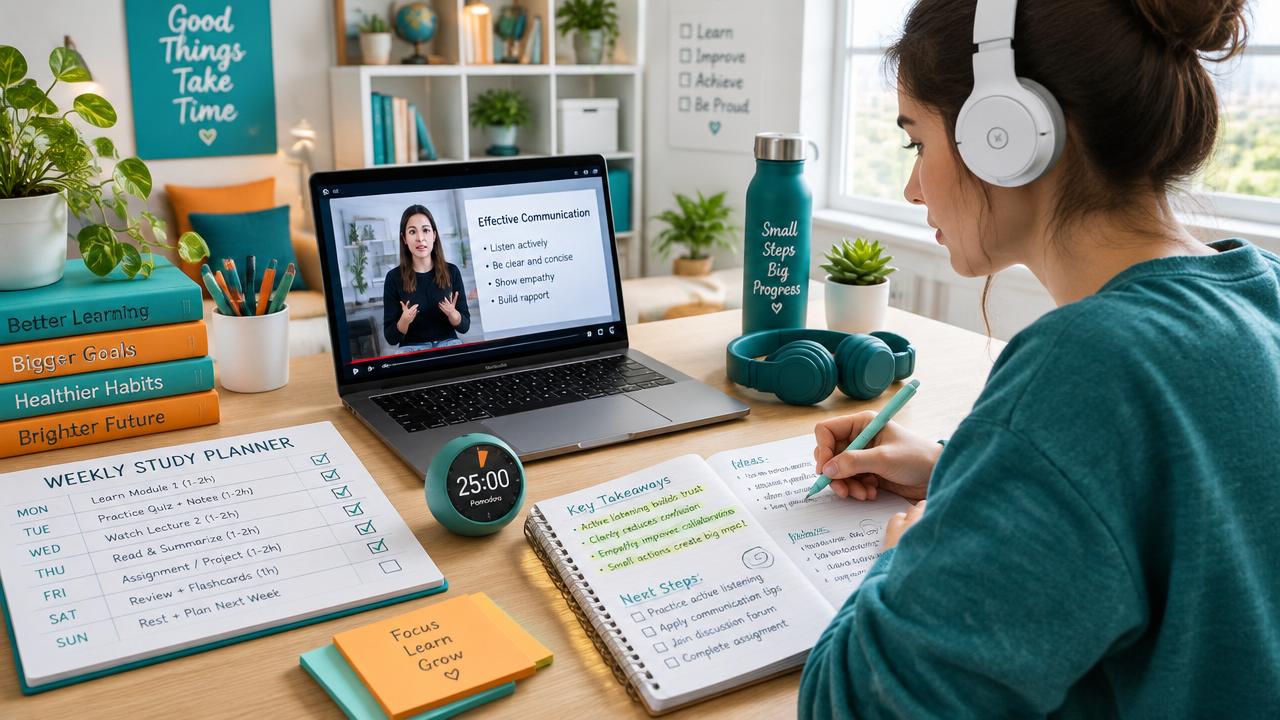
Online learning gives you incredible freedom. You can study from home, learn at your own pace and fit lessons around work, family and other responsibilities. But that same freedom can become a trap. Without a teacher watching or a classroom schedule to follow, it is easy to postpone lessons, lose focus and eventually abandon a course you were once excited about.
The difference between learners who finish and those who quit is rarely talent or intelligence. It is habits. In this article, we share twelve practical, research-backed study habits that will help you stay consistent, remember more and actually apply what you learn online.
1. Set a Clear and Specific Goal
Every successful learning journey begins with a clear destination. "I want to learn programming" is vague and easy to abandon. "I want to complete a beginner PHP course and build a working login system in ten weeks" is specific, measurable and motivating.
Write your goal down and keep it somewhere visible. When motivation dips, it reminds you why you started. If you are still deciding what to learn, our guide to the top in-demand tech skills to learn in 2026 can help you set a goal that fits the job market.
2. Schedule Fixed Study Time
Treat your study sessions like important appointments. Choose specific days and times, block them in your calendar and protect them. Even three focused sessions of forty-five minutes per week will take you further than waiting for free time that never seems to arrive.
Many learners find early mornings or the first hour after work most productive. Experiment to find your best time, then stay consistent.
3. Create a Dedicated Study Space
Your environment shapes your focus. Studying on the sofa with the television on sends your brain mixed signals. Set up a small, tidy space used mainly for learning: a desk, a comfortable chair, good lighting and everything you need within reach.
When you sit there, your mind learns to switch into focus mode more quickly.
4. Use the Pomodoro Technique
The Pomodoro Technique is simple and powerful. Work with complete focus for twenty-five minutes, then take a five-minute break. After four rounds, take a longer break of fifteen to thirty minutes.
This method works because it makes starting easier. Committing to just twenty-five minutes feels manageable, and short breaks prevent mental fatigue. Over time, you can lengthen your focus blocks as your concentration improves.
5. Eliminate Digital Distractions
Your phone is probably the biggest threat to your learning. Notifications break concentration, and it can take several minutes to fully refocus after each interruption. During study sessions:
- Put your phone in another room or switch on focus mode
- Close unrelated browser tabs
- Use website blockers if social media keeps pulling you away
- Tell family members or housemates when you need quiet time
6. Practise Active Learning
Watching videos can feel productive, but passive watching leads to weak memory. Active learning means engaging with the material: pausing to try examples, rewriting concepts in your own words and solving problems without looking at the answer.
For technical skills, this is essential. If you are learning to code, type every example yourself, then change it and observe what happens. Our PHP course for beginners roadmap recommends spending at least half of your study time writing actual code.
7. Use Active Recall to Remember More
Active recall is one of the most effective learning techniques known. Instead of rereading notes, close them and try to explain or write down what you remember. Then check what you missed.
Simple ways to practise active recall include:
- Creating flashcards with questions on one side and answers on the other
- Explaining a concept out loud as if teaching a friend
- Taking short quizzes at the end of each lesson
- Writing a summary from memory after each study session
8. Review With Spaced Repetition
Our brains forget new information quickly unless we revisit it. Spaced repetition means reviewing material at increasing intervals: one day after learning, then three days later, then a week later and so on. Each review strengthens the memory and makes it last longer.
Flashcard apps can schedule this automatically, but a simple weekly review session in your planner works well too.
9. Take Smart, Structured Notes
Good notes are not copies of the lesson. They are your personal summary of key ideas, examples and questions. Try structured formats such as the Cornell method, where you divide the page into notes, key questions and a short summary.
For programming, keep a personal cheat sheet of syntax, commands and solutions to errors you have fixed. It will become one of your most valuable resources.
10. Build Projects as You Learn
Projects turn knowledge into skill. After each module, build something small that uses what you just learned. A simple calculator, a contact form or a personal web page might seem basic, but each one reinforces concepts far better than another hour of videos.
Projects also become proof of your abilities. Our web development career guide explains how to turn these learning projects into a portfolio that attracts employers and clients.
11. Join a Learning Community
Learning alone can be isolating. Communities provide support, accountability and motivation. Join course forums, online groups or local meetups where you can ask questions, share progress and help others.
Teaching others is also one of the best ways to deepen your own understanding. When you answer someone else's question, you discover gaps in your knowledge and strengthen what you already know.
12. Take Care of Your Mind and Body
Your brain needs fuel, rest and movement to learn effectively. Sleep is when your brain consolidates new memories, so late-night cramming often backfires. Drink water, eat balanced meals, take short walks between sessions and avoid burning out.
Learning is a marathon, not a sprint. Steady progress over months beats intense bursts followed by long breaks.
Choosing a Course That Supports Good Habits
The course you choose can make good habits much easier. Short lessons, regular quizzes, hands-on projects and mentor support all encourage active learning and consistency. A poorly structured course, on the other hand, can make even disciplined learners lose motivation.
Before you enrol, use our step-by-step guide on how to choose the right online course to check whether a course offers the structure and support you need.
A Sample Weekly Study Plan
Here is a simple plan for a busy learner studying around six hours per week:
- Monday: Watch one new lesson and take notes (1 hour)
- Tuesday: Practise exercises from the lesson (1 hour)
- Wednesday: Watch the next lesson and complete its quiz (1 hour)
- Thursday: Practise and build part of a mini project (1 hour)
- Saturday: Finish the mini project and review the week with active recall (1.5 hours)
- Sunday: Light review of flashcards and plan next week (30 minutes)
Adjust it to your own schedule, but keep the balance of learning, practice and review.
Motivation gets you started. Habits keep you going long after motivation fades.
Final Thoughts
Succeeding as an online learner is not about studying for hours every day. It is about building small, reliable habits: a clear goal, fixed study time, a focused space, active learning, regular review and real projects. Combine these habits with a well-structured course and a supportive community, and you will not only finish your courses but also turn what you learn into real skills and opportunities.
Start with just one or two habits from this list this week. Once they feel natural, add another. Small changes, repeated consistently, lead to remarkable results.
Keep reading
 Programming
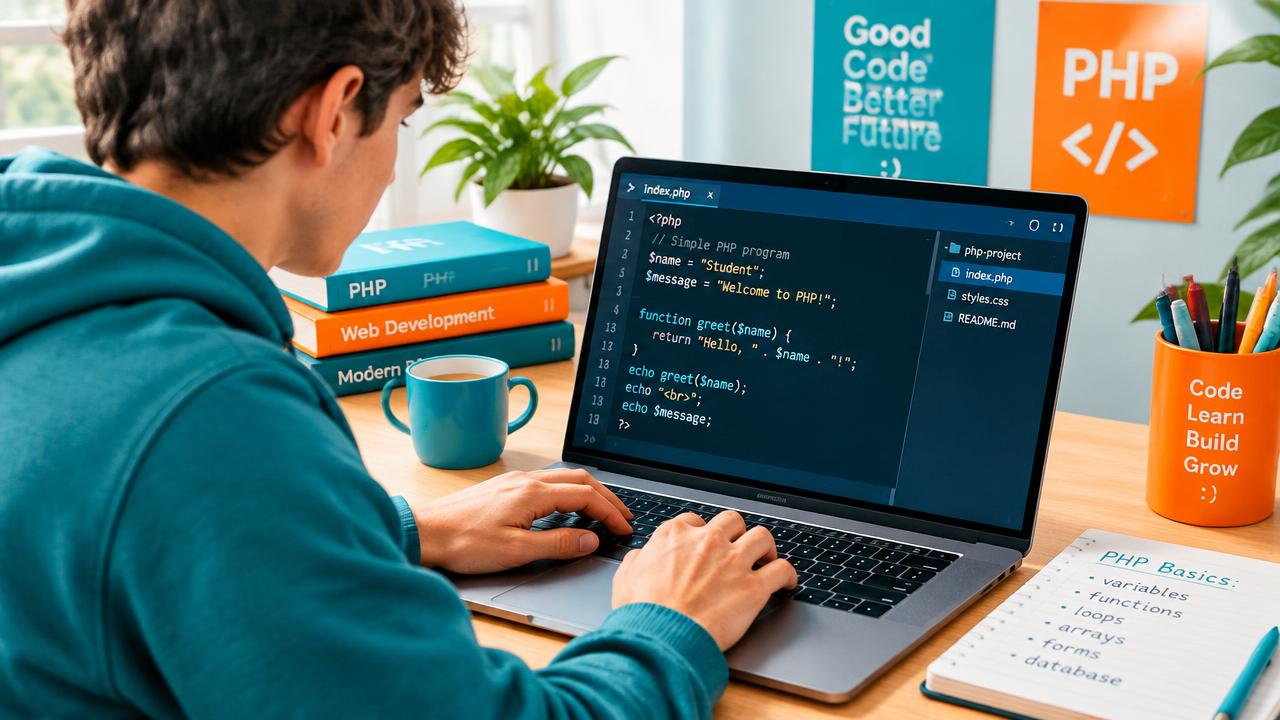
PHP Course for Beginners: A Complete Roadmap to Start Coding in 2026
Everything you need to know before starting PHP: what to learn, how long it takes, common mistakes and where PHP can take your career.
Read article Careers
Top 10 In-Demand Tech Skills to Learn in 2026
From web development and AI to cloud and cybersecurity, discover the tech skills employers want most and how to start learning them.
Read article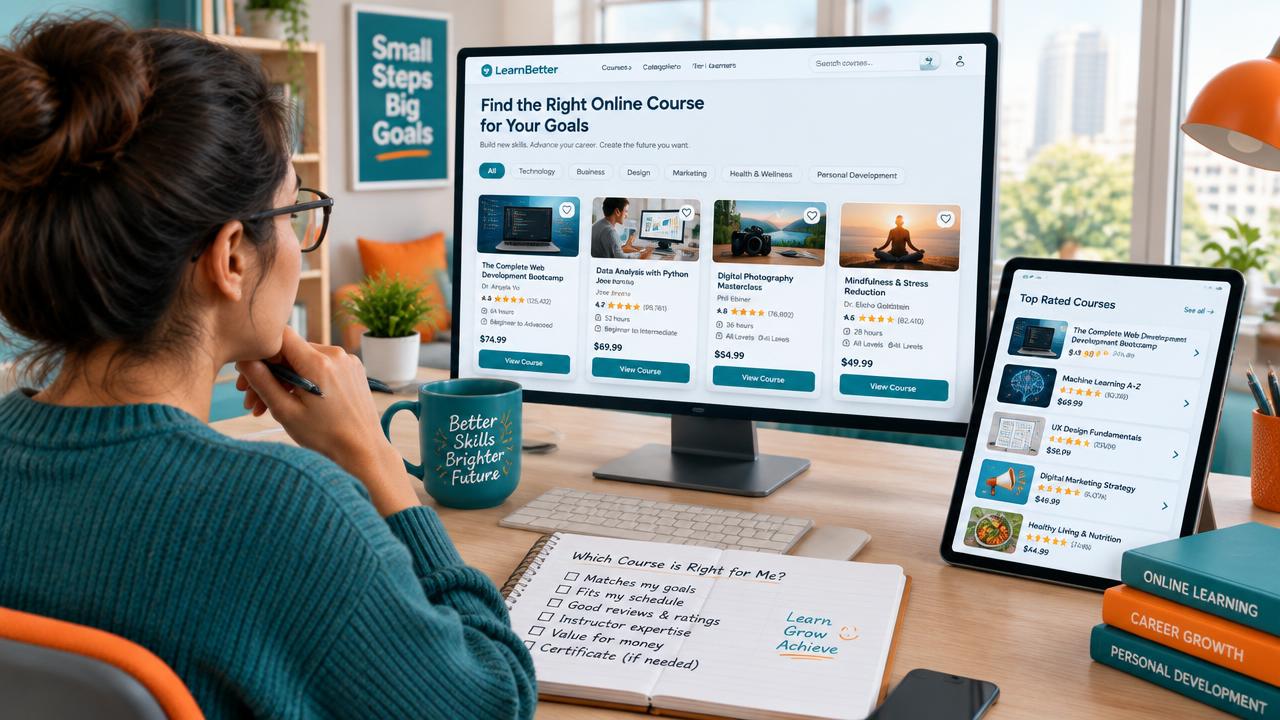 Learning
How to Choose the Right Online Course for Your Career Goals
A practical 9-step framework to compare syllabuses, instructors, projects and certificates so you pick a course you will actually finish.
Read article