How to Choose the Right Online Course for Your Career Goals
November 2, 2026 · 6 min read
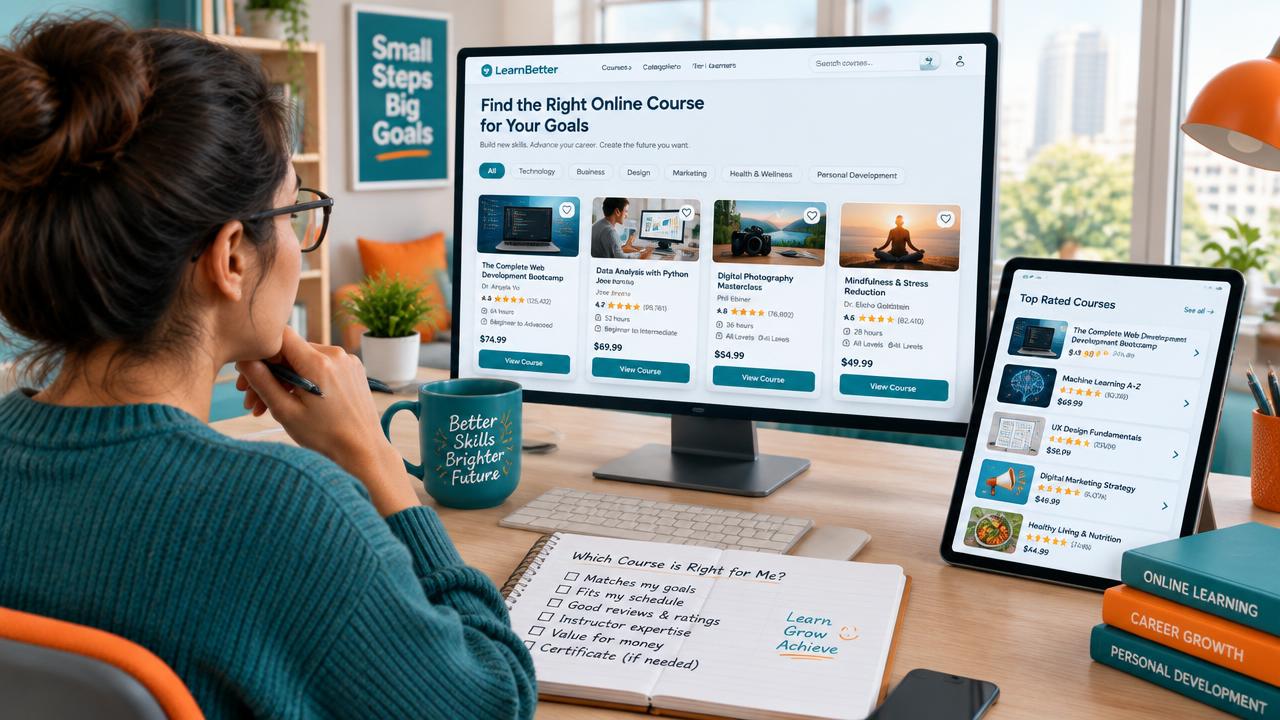
There has never been more choice in online education. With a few clicks you can find thousands of courses on programming, design, marketing, data and almost any skill you can imagine. That abundance is wonderful, but it also creates a real problem: how do you know which course is actually worth your time and money? Many learners enrol with excitement, lose motivation halfway and never finish. Usually the issue is not a lack of discipline. It is choosing a course that did not match their goals, level or learning style.
This guide gives you a clear, practical framework for choosing the right online course for your career. By the end, you will know exactly which questions to ask, which red flags to avoid and how to make a confident decision.
Step 1: Start With Your Goal, Not the Course
Before you browse a single course page, write down what you want to achieve. Be specific. "Learn coding" is too vague. "Build a dynamic website with a login system and database in three months" is clear and measurable.
Your goal might be one of these:
- Getting your first job in tech
- Switching careers from a non-technical field
- Earning a promotion or salary increase in your current role
- Starting freelance work on the side
- Building a website or tool for your own business
Each goal points to a different kind of course. Someone aiming for a job needs a strong portfolio and recognised certificate. A business owner may only need practical, focused lessons. If you are not sure which skill to pursue, our overview of the top in-demand tech skills to learn in 2026 can help you narrow it down.
Step 2: Be Honest About Your Current Level
Courses are usually labelled beginner, intermediate or advanced, but those labels are not always accurate. Read the prerequisites carefully. If a beginner course expects you to already know a programming language, it is not truly for beginners.
Choosing a course that is too advanced leads to frustration. Choosing one that is too basic leads to boredom. Both end the same way: you stop. A good way to check your level is to look at the first few lessons or a free preview. If you understand roughly seventy percent of it, you are in the right place.
Step 3: Study the Syllabus Closely
The syllabus tells you what you will actually learn. Look beyond the course title and read every module. Ask yourself:
- Is the content up to date? Technology changes quickly. Check that tools and language versions are current.
- Does it progress logically? Good courses build from fundamentals to complex topics step by step.
- Does it cover practical skills? Theory matters, but you should spend most of your time doing.
- Is there a final project? A capstone project proves you can apply everything you learned.
For example, if you are interested in back-end development, a solid beginner programming course should move from core syntax to forms, databases, security and a complete project. Our detailed PHP course for beginners roadmap shows what that progression should look like in practice.
Step 4: Check the Instructor's Experience
An instructor can make or break your learning experience. Look for someone who has real industry experience, not just teaching experience. Watch a sample video to see whether their explanations are clear, their pace suits you and their teaching style keeps you engaged.
Good instructors explain why something works, not just how to type it. They anticipate common mistakes, share real-world examples and make complex ideas feel simple.
Step 5: Look for Hands-On Practice and Projects
You cannot learn to swim by watching videos, and you cannot learn a skill by only watching lectures either. The best online courses include:
- Coding exercises or practical tasks after each lesson
- Quizzes to check understanding
- Mini projects at the end of each module
- A portfolio-ready final project
- Downloadable resources, templates and cheat sheets
Projects are especially important if you want a job. Employers want evidence. A course that helps you build three solid projects is worth far more than one that only gives you a certificate. Our web development career guide explains how to turn course projects into a portfolio that impresses recruiters.
Step 6: Evaluate Support and Community
Learning online can feel lonely, especially when you get stuck on a problem at midnight. Support makes a huge difference to completion rates. Check whether the course offers:
- Mentor or instructor support for questions
- Code reviews or feedback on assignments
- A discussion forum or learner community
- Live sessions, doubt-clearing classes or office hours
Even a simple community where learners help each other can keep you motivated and accountable.
Step 7: Consider Flexibility and Time Commitment
Be realistic about your schedule. If you work full-time or have family responsibilities, a self-paced course with short lessons may suit you better than a rigid live bootcamp. On the other hand, if you struggle with motivation, scheduled live classes can provide useful structure.
Check the estimated hours per week and total duration. Then look at your calendar and decide honestly whether you can commit. Our guide to effective study habits for online learners shares practical methods for fitting learning into a busy life.
Step 8: Understand the Certificate and Its Value
Certificates are useful, but their value varies. A certificate is most meaningful when it represents real, verifiable work, such as completed projects and assessments. Check whether you can share it on professional networking profiles and whether it includes a verification link.
Remember that a certificate opens the door, but your skills and projects are what get you through it.
Step 9: Compare Price With Real Value
The most expensive course is not always the best, and the cheapest is not always a bargain. Instead of comparing price alone, compare value:
- How many hours of quality content are included?
- How many real projects will you complete?
- Is there mentor support and feedback?
- Is access lifetime or limited?
- Are there updates when the technology changes?
A course that costs a little more but includes mentorship and projects can save you months of confusion and wasted effort.
Red Flags to Watch Out For
Be cautious when you see any of the following:
- Guaranteed job promises with no clear explanation of how placement works.
- Outdated content that references tools or versions that are years old.
- No preview lessons or sample content before you pay.
- Only theory with no exercises, projects or assessments.
- Unclear refund policies or hidden extra costs.
A Simple Checklist Before You Enrol
Before you click the enrol button, run through this quick checklist:
- Does this course directly support my specific goal?
- Is it the right level for me right now?
- Is the syllabus current, structured and practical?
- Will I build real projects I can show?
- Is support available when I get stuck?
- Can I realistically commit the required time each week?
- Does the price reflect genuine value?
If you can answer yes to most of these, you have probably found a good match.
The right course is not the most popular one. It is the one you will actually finish and apply.
Final Thoughts
Choosing the right online course is one of the most important decisions in your learning journey. Start with a clear goal, be honest about your level, study the syllabus, check the instructor, prioritise hands-on projects and make sure support is available. Avoid courses that promise everything and deliver little.
Once you choose, commit fully. Finish the lessons, complete every project and share your work. The right course, combined with consistent effort, can genuinely change the direction of your career.
Keep reading
 Programming
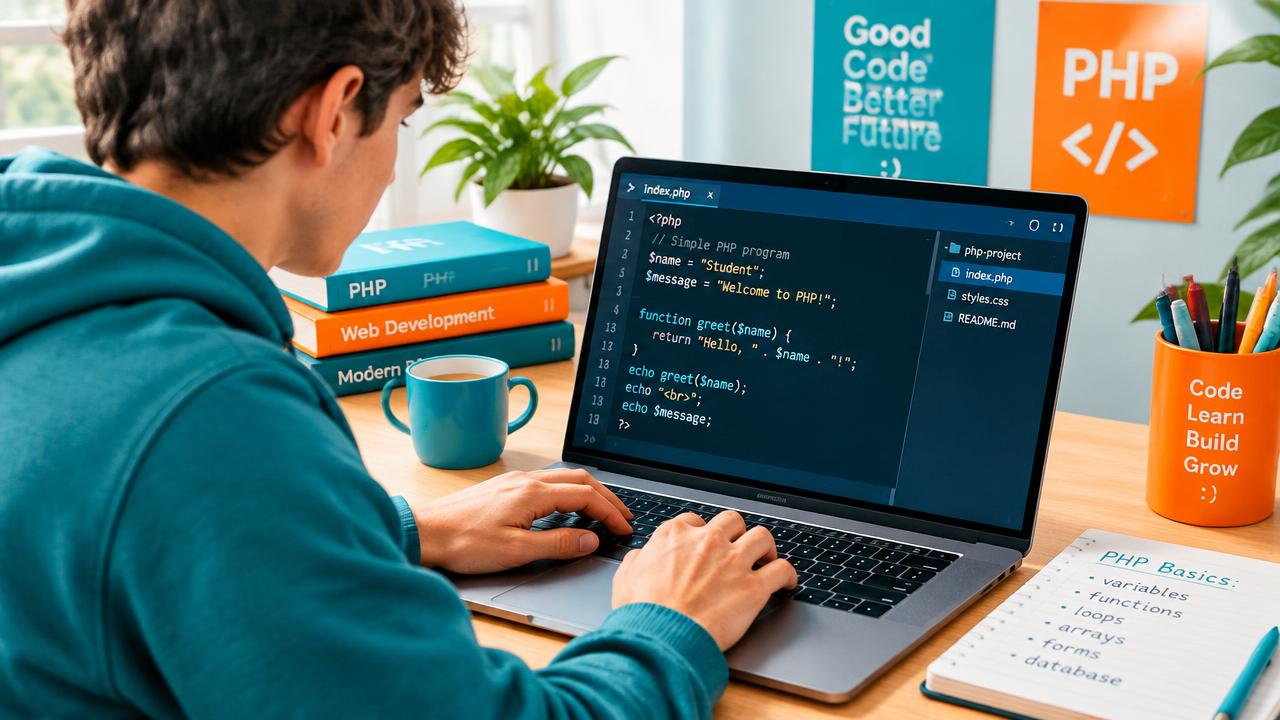
PHP Course for Beginners: A Complete Roadmap to Start Coding in 2026
Everything you need to know before starting PHP: what to learn, how long it takes, common mistakes and where PHP can take your career.
Read article Careers
Top 10 In-Demand Tech Skills to Learn in 2026
From web development and AI to cloud and cybersecurity, discover the tech skills employers want most and how to start learning them.
Read article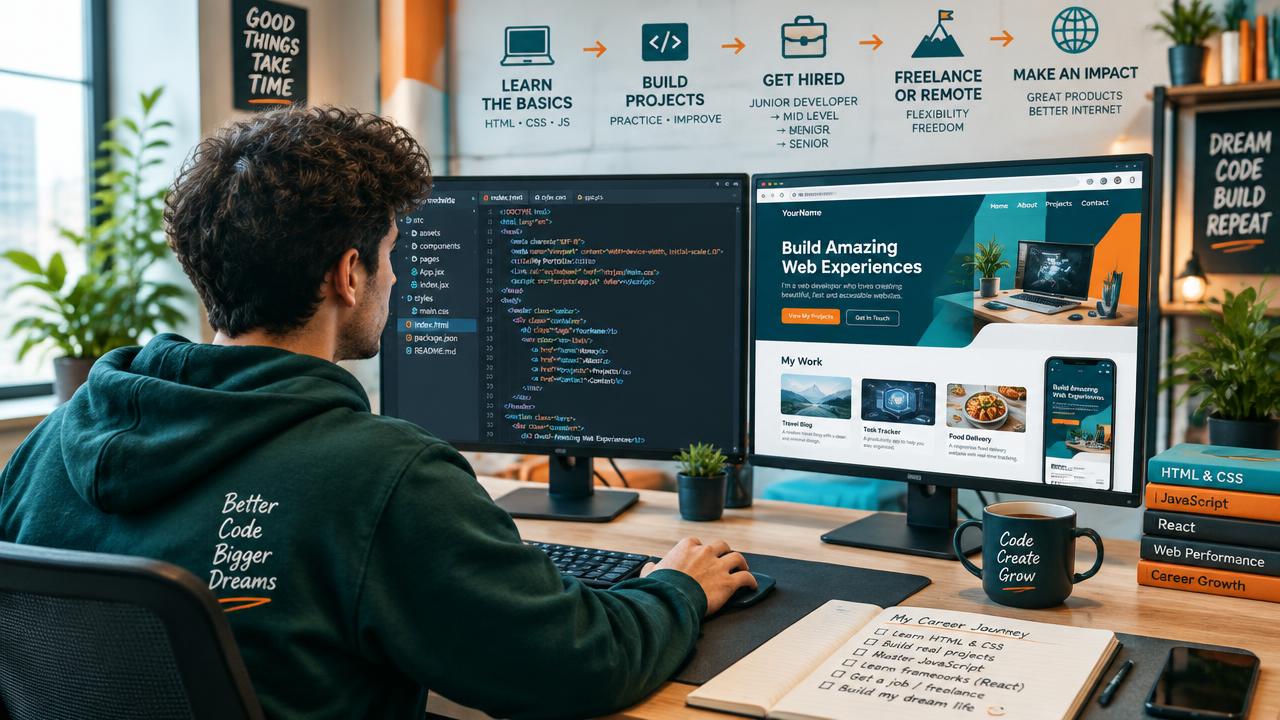 Careers
Web Development Career Guide: From Beginner to Job-Ready
A step-by-step path from HTML and CSS to back-end, databases, portfolio projects and interviews for aspiring web developers.
Read article